
Jesse Boone IV: Outlines of a Man
There’s a particular stillness at the heart of Jesse Boone’s new EP, Silhouette, the Virginia-bred rapper’s first body of work since his poignant Close to Home in 2023. Silhouette doesn’t rush to introduce itself or chase attention, yet its presence is undeniable—standing in the industry’s doorway, backlit, offering an outline of the artist Jesse is becoming. Over the span of a potent 14 minutes, the shadows and light of the project work in tandem, sketching the shape of an artist on the never-ending pursuit of immortality.
A silhouette is what remains when illumination hits something you’re still learning to see, and that metaphor perfectly captures this moment in Jesse’s life. He isn’t hiding, but he isn’t fully revealed either. He exists in a sacred middleground where ego is being dismantled, faith is being tested, and ambition is being rerouted toward something much deeper than an audience’s applause. In a moment when rap often mistakes visibility for intimacy and virality for impact, Silhouette resists. It invites the listener to show up—for themselves.
Jesse and I recently connected for a candid conversation about the EP. We explored the music and its origins, but Jesse also spoke with candor about fear, discipline, and killing off old versions of himself that no longer serve his calling. He also discussed the fight against creating for validation, releasing art without letting it define him, and seeking God over vanity.
This conversation has been edited for length and clarity.
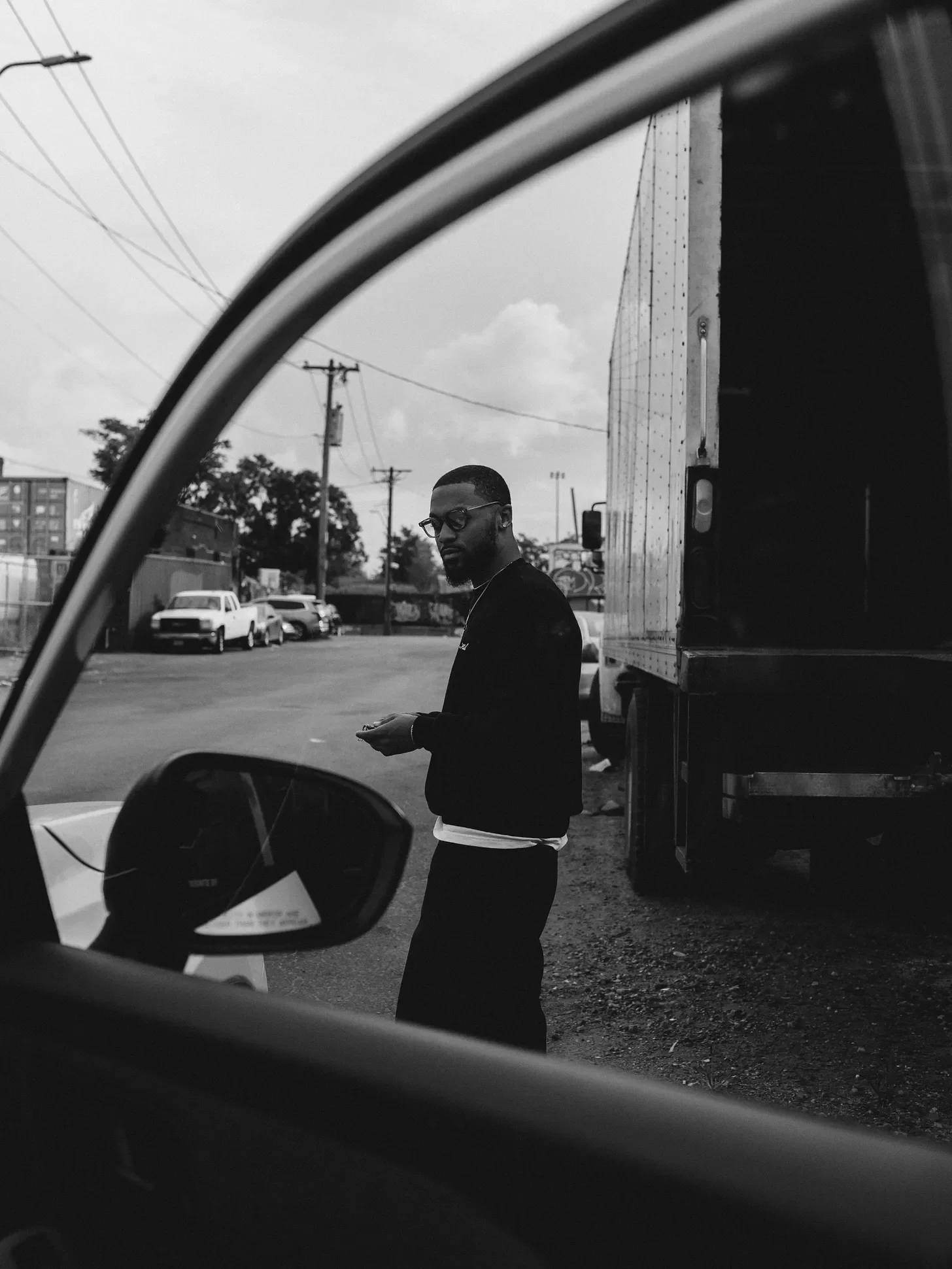
Photo by: Tiana Bryant
Curtis Rowser III: You just put Silhouette into the world—your first project since Close to Home in 2023. First off, congrats again. Sitting here right now, how are you feeling?
Jesse Boone: I feel good, bro. I feel good that it’s out in the world. I’m finding that one of the things I enjoy the most is publishing the work. There’s just something about holding on to something, for however long, and then allowing it not to be mine anymore. Now, I’m just excited to have people listen to it. The responses so far have been really good, and I’m excited for people to sit with it and enjoy the shit the same way I do.
Why Silhouette? What does that word hold for you at this juncture in your life and career?
The word itself signifies a veil, a shadow, an outline, a light covering. And when I put these songs together, I can feel myself, creatively, taking more liberties—but it just feels like a step. It feels like there’s still a veil to get past. There’s inklings in every song where it’s like, Oh, we gonna take it there, but it’s just a glimpse. And that was my reason for naming it Silhouette. I feel like off the back of this—just like off the back of Close to Home, or any of my projects for that matter—they’re all just stepping stones to get to the next thing.
You’re always working on music, so you’ve really been working on this project before you even knew it was one. When did you start to realize you were sitting on more than just a collection of strong records, but something cohesive—something with a deeper through-line?
This time, it was just a matter of taking stock. For me, and my entire creative journey up to this point—and even in my everyday life, aside from creatively—I’ve always looked at things like, What’s next, what’s next, what’s next? That speaks to a lack of groundedness and a lack of being present. With that, I was like, go look at what you already done did—what’s already out there, what already has potential, what’s already finished, what’s already there that I could build around and take from. That was a pivotal learning lesson for me. Sometimes everything you’re looking for is already there, and you just have to be a little bit more intentional and center yourself. So that was the thing for this project. I went to the studio, went through the records, and Silhouette was sitting there.
I always find it interesting how songs that were created over a long period of time, as is the case with Silhouette, could still be so reflective of where you’re at today.
For me, doing music and creating consistently, and then publishing music, is less about the music itself, and more about the practice and discipline of doing music, creating, and publishing—because of what it does for me on the back end. Creating projects and creating music not only makes me a better artist, it’s making me be a better man. It’s showing me how to show up, it’s showing me how to stay disciplined, how to problem-solve. It shows me how to assess my weaknesses. So it’s like, how could I ever give up when I always find something to get better at… Making and delivering music is fully encompassing for me. That’s where I’ve been at with creation in general. It’s essential. I have to do it. And that’s a really good feeling for me.
What do you think this project reveals about yourself that maybe your earlier work didn’t?
It’s so important to get the work out because it reveals so much through the process. I can’t speak to what it says for other people, but what it lets me know is that the places I can go are limitless. And through that, creatively, it’s opened up avenues for me to take those leaps and steps. Aside from the music, it also gives me confidence. Regardless of how it performs, it lets me know where I can go in terms of project management, in terms of showing up and handling my business, in terms of what I can do show-wise. It all only excites me to keep going, keep releasing, keep sharing, keep posting, keep diving deeper.
What version of you had to die for this one to exist?
The encapsulating word is ego; the most potent word for it might be fear—fear of what people think, fear of how I’m perceived, fear of what people may say. And that all stems from my childhood. And it’s dying, however fast or slow. I’m shedding all of that stuff because I can’t use it. It’s not necessary for me; it’s not necessary in my heart. Whether it’s procrastination, whether it be fear, a lack of confidence—all of that stuff gotta go. It only points toward: You gotta lean on God, bro.
How do you navigate the tension between making something meant to last and making something that connects right now? Both matter—especially in 2026, when longevity and virality are constantly pulling at each other. How do you walk that line?
This goes back to shedding things and killing parts of yourself. I want to get to a point where I’m operating from the place of, rather simply: I create and I share. So moving forward, I expect a lot more from myself from a release standpoint. If I make a song specifically for SoundCloud, let that be it. If this freestyle is for TikTok, then it’s just for TikTok. If this song is for DSPs—you get the point. Everything can have its place, because I’m multifaceted. From my perspective, that’s how you balance it: you let yourself be the vessel, and you share—and you get out of your head about how these things may perform on paper, because they all feed somebody.
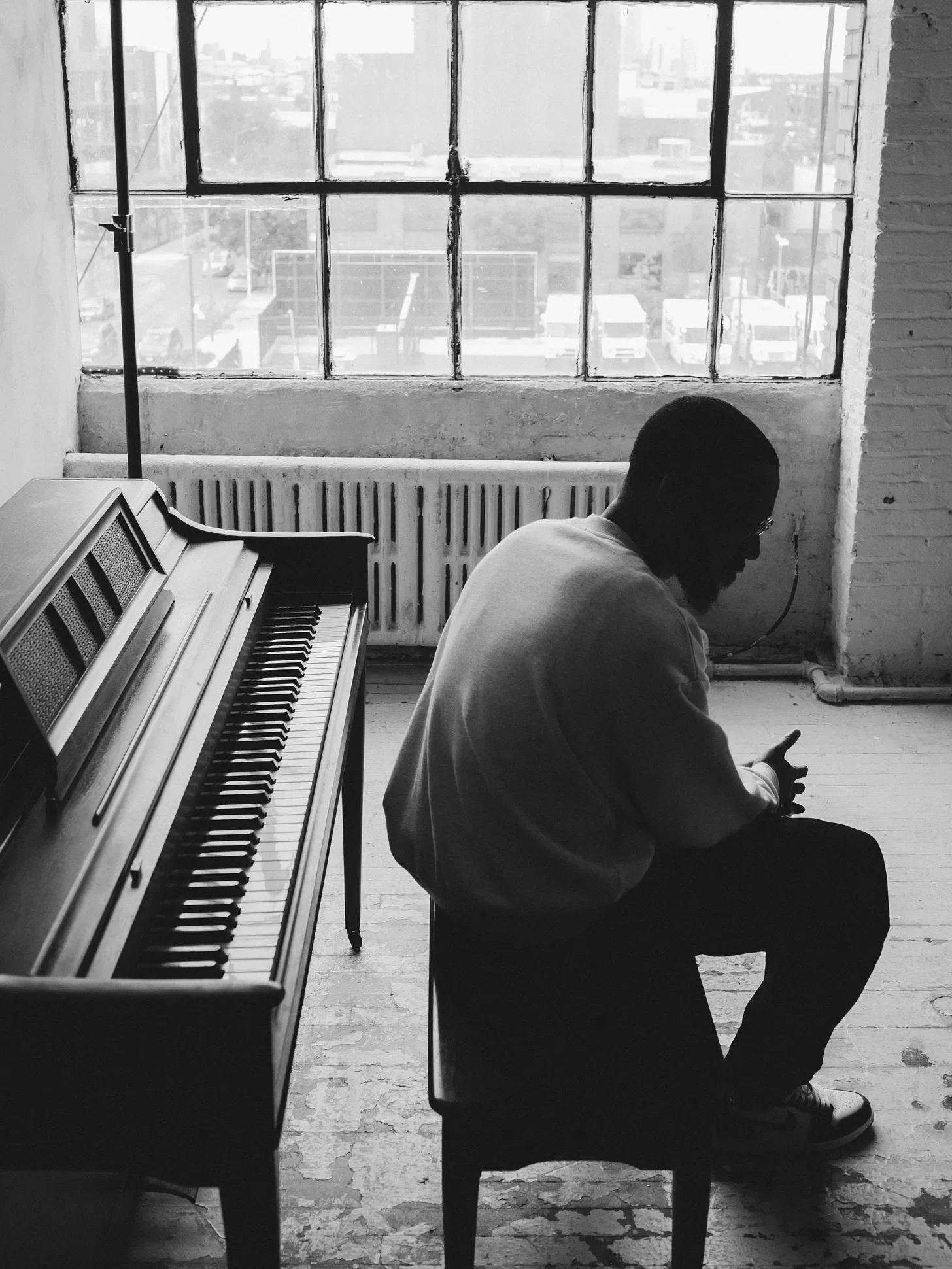
Photo by: Tiana Bryant
How has your definition of “making it” changed over the years? What were you chasing when you first started rapping at 17, compared to what you’re striving for now?
I’m really glad you asked this question, because it’s only moments like this where I can really reflect all the way back and be like, You just have to keep going. Because I realized in all of those early years, I was really just chasing vanity. I knew I wanted to make a certain type of music and feed it to a certain type of people, but I just wanted to see what them lights was like. I was looking at all my favorite artists like, Dang, what does it look like to have all this money and have all these things—just to learn that once you get there and have it, it ain’t all that cute. Once again, that leads back to killing things off.
I really just want to be used, bro. I really want God to work through me. I want to maximize my potential as an artist. I don’t know where that takes me—but where I feel like it takes me is, perennial all-star and more. Only God knows what I’ll be prepared for, but that’s what I’m after now. And I’m not trying to be here for just a little second—I’m here to stay.
When you think about Silhouette, what do you want listeners to understand about Jesse Boone, the artist, the man, through the lens of the project?
I don’t know if I have thoughts on how I want people to think about me. When people hear this music, I want them to think about themselves. I want them to listen to the music and think about the shit they have going on—and use the music to cope with it, live with it, shape it—or whatever the case is. It ain’t about me at all, it’s really about us, bro… Whoever’s listening will make their mind up about me. They’re all going to have a way they think I am, a way they perceive me—and however they feel about me, I’m fine with it. I’m good with it. Thank God.
